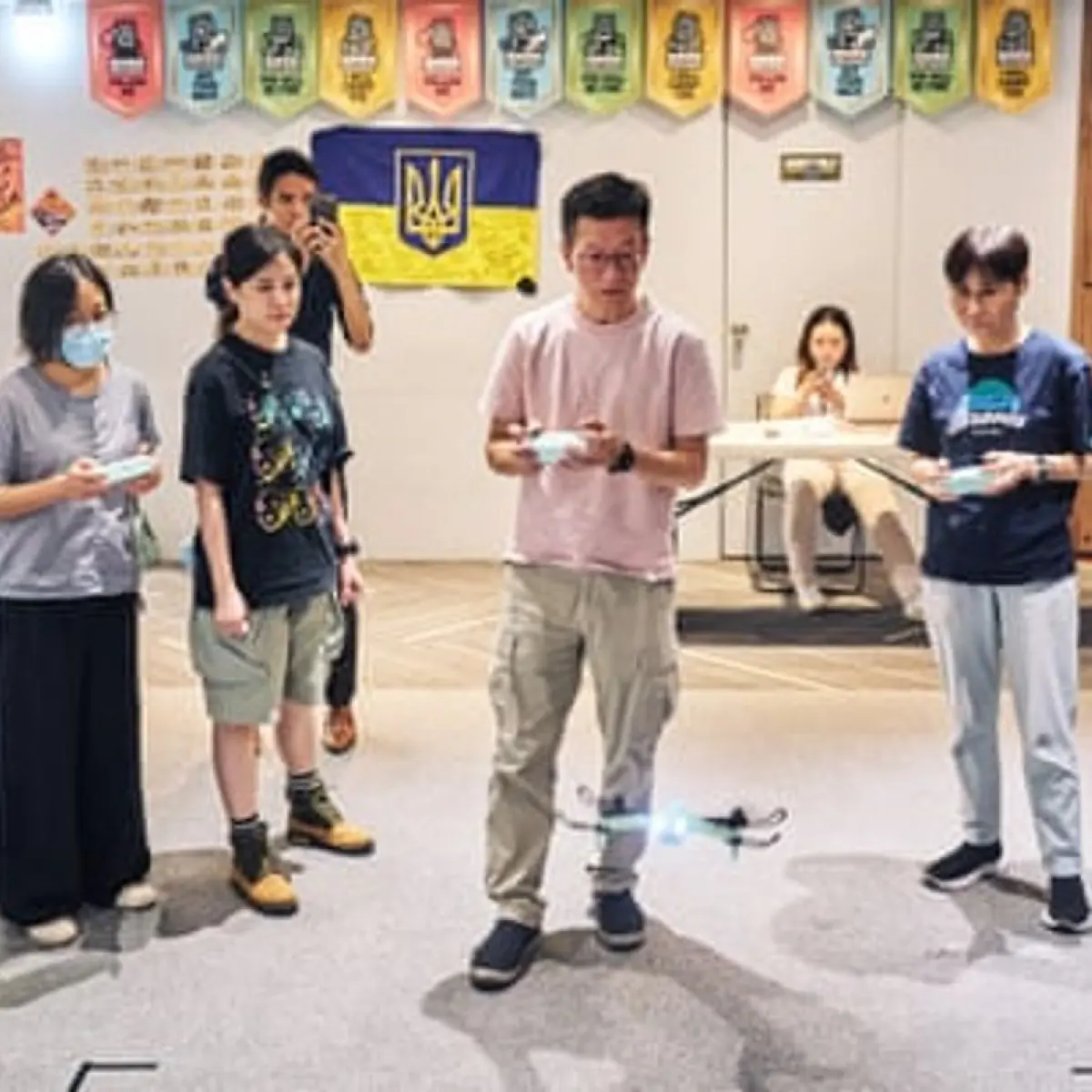
PORTALBERITA.CO.ID - In a small, busy training room located in Taipei, participants are meticulously learning to control unmanned aerial vehicles, a direct response to the heightened military threat posed by mainland China. Pan Chien-chin, a first-time drone pilot and food company worker, was observed gently adjusting the controller joysticks, attempting to keep the device steady in the air.
A wave of applause erupted as Pan successfully navigated his drone around a course marked by traffic cones without incident, marking a small but significant victory for the novice flyer. He was surrounded by approximately two dozen other trainees, all participating in Taiwan’s inaugural civil defense drone training program.
Pan Chien-chin explained that the conflict in Ukraine has fundamentally altered perceptions regarding the battlefield utility of drones. "The war in Ukraine has really changed how drones are used," said Pan Chien-chin, a food company worker.
He views this new skillset as a proactive measure for personal preparedness in the face of regional instability. "It’s like giving myself another skill, something I can use if it’s ever needed one day," added Pan Chien-chin, a food company worker.
This pioneering course, which commenced in May, reflects a broader trend where Taiwan's civil defense movement is actively adopting lessons learned from the conflict in Ukraine, where drones have been crucial since 2022. Tang Tsong-yi, a spokesperson for Kuma Academy, the NGO organizing the training, stated that the curriculum aims to educate beginner pilots on the tactical capabilities of these devices in conflict zones.
The initiative is part of a wider push to boost drone literacy among the populace, as the self-ruled democracy continues to face increasing military pressure from Beijing. According to Taiwan’s Civil Aviation Administration, the number of registered drones in Taiwan exceeded 39,000 by December, following the lowering of the minimum registration age to 14 in 2024.

The Kuma Academy sessions are proving highly popular, with classes sold out through August, accommodating approximately 75 trainees monthly. The cohort attending Pan’s introductory class was notably diverse, spanning ages from teenagers to individuals in their sixties, with women comprising over half the attendees.
Karren Wang, a 65-year-old retiree, expressed her motivation for joining, noting that drone operation could be a vital contribution given her age during a crisis. "Even if you crashed terribly, they would still say: ‘Great job’," said Karren Wang, a retiree.
The five participants interviewed confirmed they had previously engaged in other local civil defense training, such as first aid and casualty evacuation, signaling a shift towards more operational readiness. Unmanned systems are considered especially valuable for frontline reconnaissance across Taiwan's challenging mountainous geography in any potential invasion scenario.