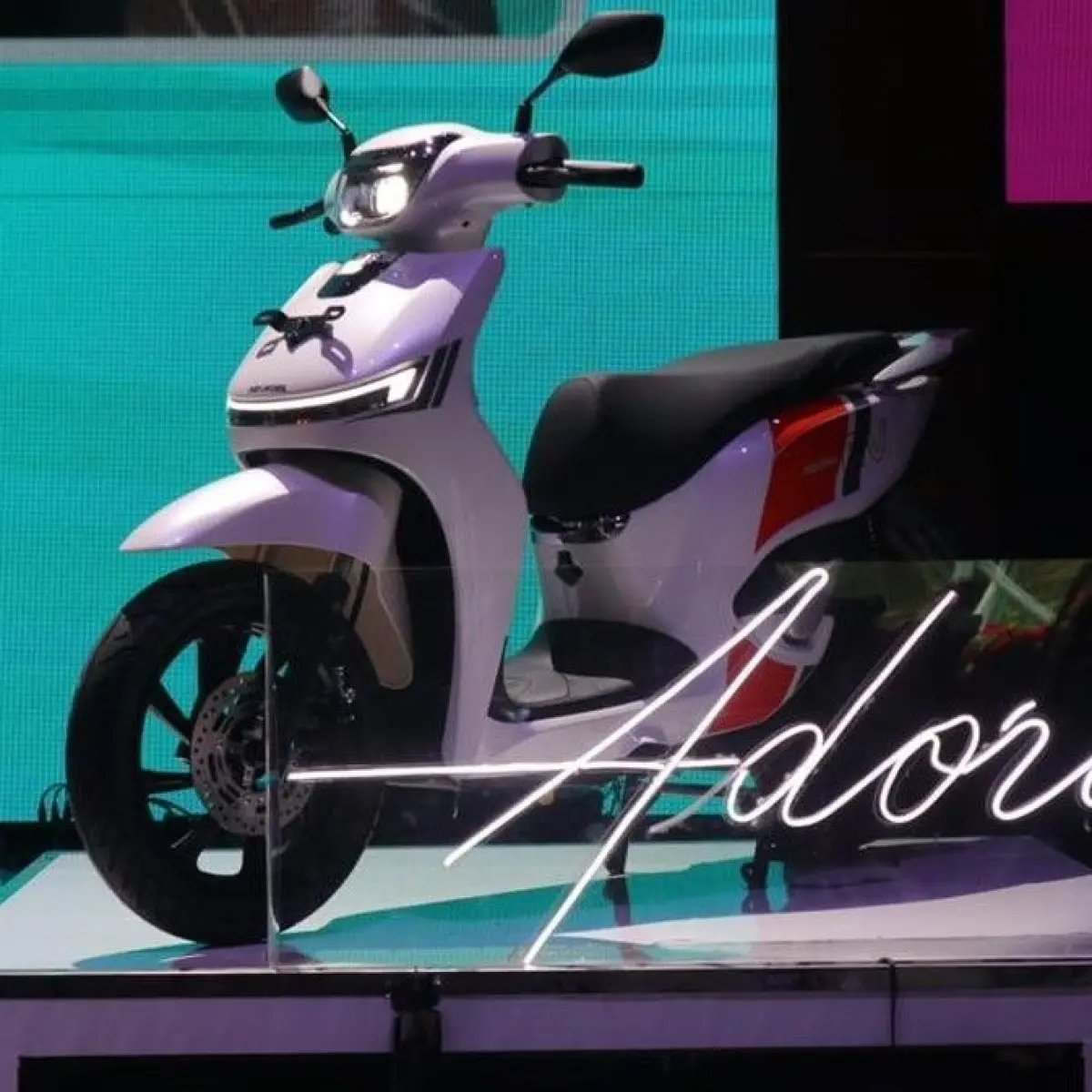
PORTALBERITA.CO.ID - A significant shift in Indonesia's automotive market dynamics has recently become evident following the latest adjustments to non-subsidized fuel prices. This direct market response has triggered a sharp escalation in the demand for electric motorcycles across various regions of the archipelago.
The increase in the retail price of conventional, non-subsidized fuel is widely understood to be the primary catalyst for this change. This economic pressure is compelling consumers to actively seek operational alternatives that promise greater long-term cost efficiency.
This resulting efficiency drive has consequently prompted a noticeable preference shift among two-wheeler buyers. Consumers are increasingly moving away from traditional internal combustion engine vehicles toward battery-powered alternatives.

The dramatic surge in electric motorcycle sales figures was officially confirmed by key industry stakeholders. This data underscores the immediate impact of energy price fluctuations on consumer behavior in the mobility sector.
As reported by Pius Wirawan, the Chief Executive Officer (CEO) of Indomobil e-Motor, the growth trajectory for zero-emission vehicles has sharply accelerated. This acceleration followed precisely in the wake of the recent adjustments to domestic energy commodity pricing.
"The trend of market growth for non-emission vehicles has directly jumped following the adjustment of those energy commodity prices," stated Pius Wirawan, CEO of Indomobil e-Motor.
This phenomenon indicates that operational expenditure remains a critical deciding factor for Indonesian consumers when selecting personal transportation methods. The market is rapidly recalibrating based on immediate economic indicators.
The location of this reported sales boom centers around the Indonesian automotive market, where these policy changes are being felt most acutely. The time frame for this sharp increase is immediately post-price revision.
What is most notable is the magnitude of the increase, reportedly quadrupling demand in certain segments. This rapid scaling suggests that electric mobility is moving from a niche interest to a mainstream solution much faster than anticipated.