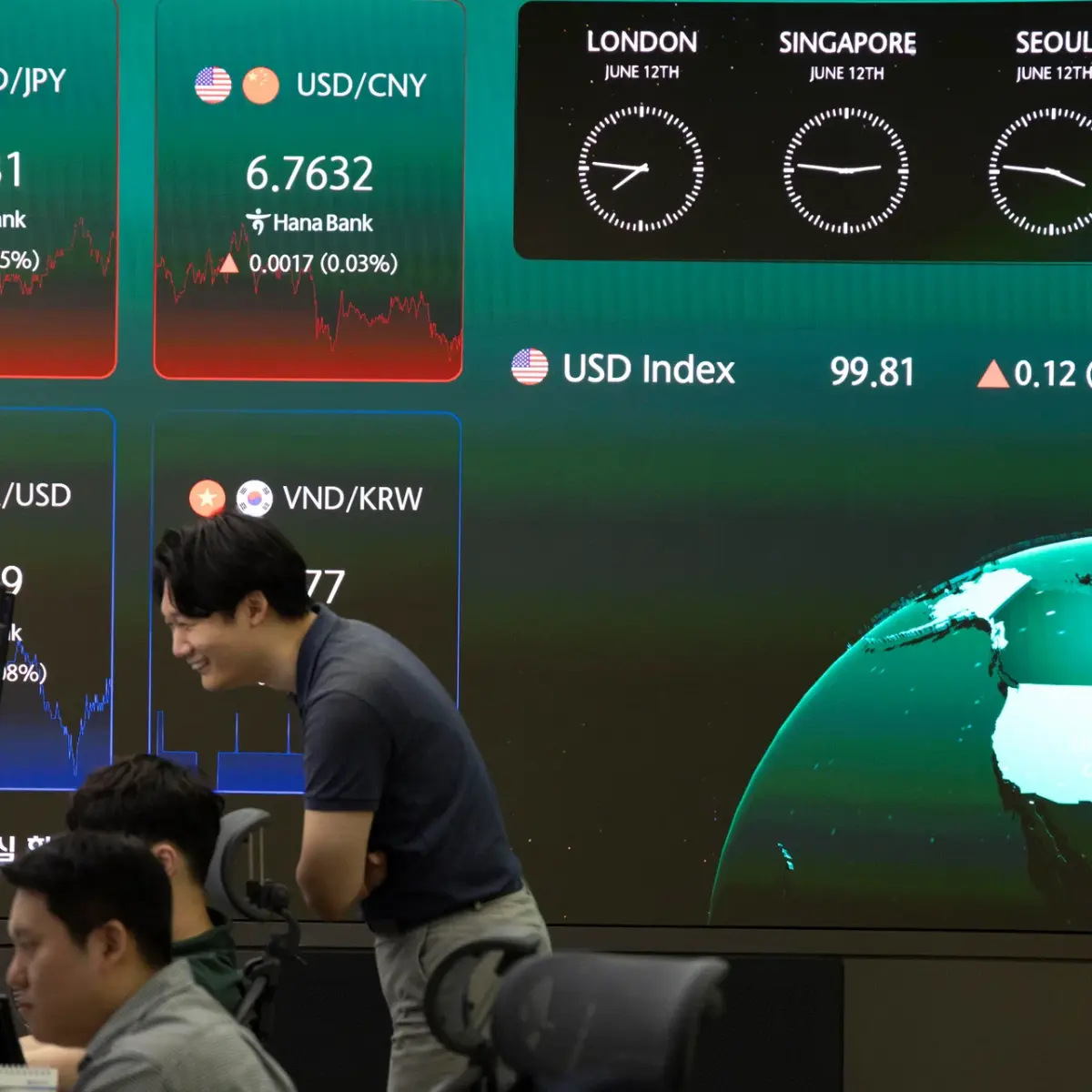
PORTALBERITA.CO.ID - The South Korean stock market is aggressively pursuing its long-sought reclassification to MSCI developed-market status, a significant development following a year of extraordinary performance, as reported by Businesstimes. This pursuit comes after the domestic benchmark, the Kospi, emerged as the world's top-performing major equity index in 2026, surging over 90 percent.
What catalyzed this dramatic rise was intense global investor appetite for South Korean companies deeply embedded in artificial intelligence technologies. However, this rapid ascent introduced significant instability, causing the benchmark index to frequently trigger domestic exchange safeguards during recent trading sessions.
Who is watching this closely are global investors awaiting the crucial MSCI annual market-classification review scheduled for June 23. During this session, the index provider will determine if South Korea is placed onto the watchlist signaling potential movement from emerging to developed status.

Where the market currently stands is a point of contention, as a recent Bloomberg survey of 15 investors indicated that most anticipate MSCI will maintain South Korea’s emerging-market designation for the immediate future. This skepticism stems from the belief that recent structural reforms need more time to prove their long-term viability.
"It’s more of a matter-of-time issue," stated Lee Young Jae, who serves as a senior investment manager at Pictet Asset Management. "Korea will become a developed market at least in the next couple of years. That’s my base case."
Why the debate persists is due to the evolving nature of South Korean investment, where the market's performance is increasingly tied to global AI trends rather than traditional domestic indicators. The weight of Samsung Electronics and SK Hynix alone accounts for over half of the Kospi's total capitalization.
"It doesn’t matter in a sense that Korea is now such a global play," commented Arjun Jayaraman, a portfolio manager at Causeway Capital Management. "It’s not about investing in Korea. It’s about investing in AI plays."
How the market functions now supports the developed-market argument, as the national equity market valuation swelled to approximately US$4.4 trillion over the past year, briefly elevating it past India as the sixth-largest globally. Furthermore, South Korean firms hold indispensable roles across global semiconductor, automotive battery, and manufacturing supply chains.
When considering the scale of this potential transition, Chetan Seth, an Asia equity strategist at Nomura Holdings in Singapore, described the shift as unprecedented. "No other country in recent times with Korea’s substantial weight in existing indices has moved from one market classification to another," Chetan Seth stated.