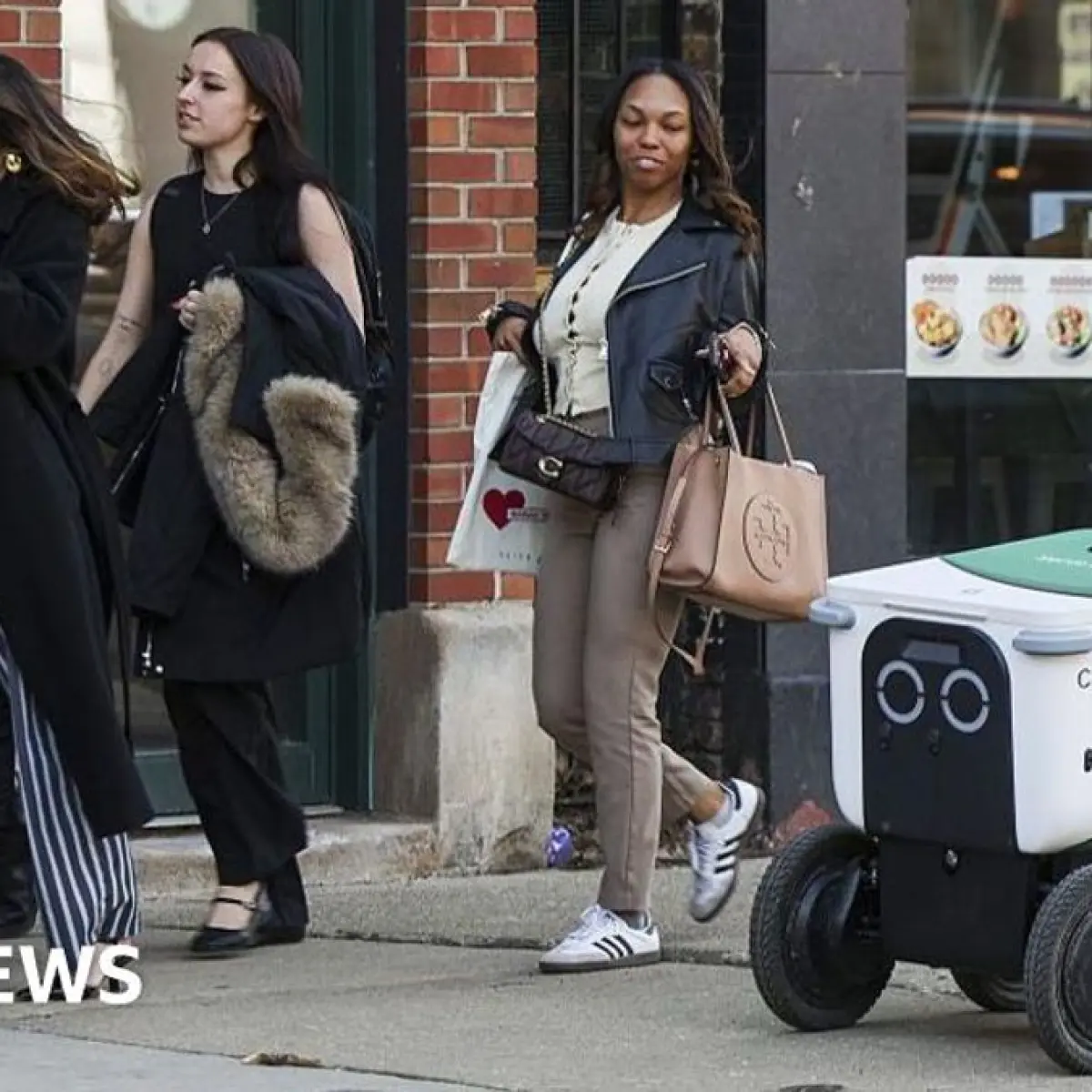
PORTALBERITA.CO.ID - Autonomous urban delivery vehicles, commonly known as delivery robots, are increasingly populating sidewalks in major cities across the US, UK, Japan, South Korea, and Germany, ferrying groceries and fast food using advanced navigation technology.
These robots utilize cameras, sensors, and GPS to navigate, with operators claiming they can safely avoid obstacles and reduce traffic congestion and emissions. However, this technological convenience is creating significant friction with residents and local governance.
Chicago resident John Roberts initially found the appearance of the robots novel, stating, "I actually thought they were kind of neat – it felt futuristic," John Roberts said.
That positive perception quickly soured when Roberts and his family were forced to step aside for an approaching machine while walking, leading to frustration.
Roberts elaborated on the disruption, saying, "To us it felt a little off - the fact that we were on the one strip reserved for walking, and we were having to get out of the way," John Roberts said.
He expressed growing concern over the potential chaos if numerous these devices proliferated, noting, "I started thinking about what it would be like for us to go for a walk as a family if there were dozens of robots with lights and cameras zipping around," John Roberts said.
The negative interactions have spurred action, with San Francisco limiting robot access to quieter zones and Toronto outright banning sidewalk use since 2021; Chicago has also restricted them in two small districts.
Mr. Roberts is actively campaigning for a city-wide suspension until comprehensive safety testing is completed and formal usage rules are established, having already gathered approximately 4,400 signatures on his petition.
Reports indicate that pedestrians frequently have to enter the street to bypass these machines, and collisions are occurring, according to Roberts.