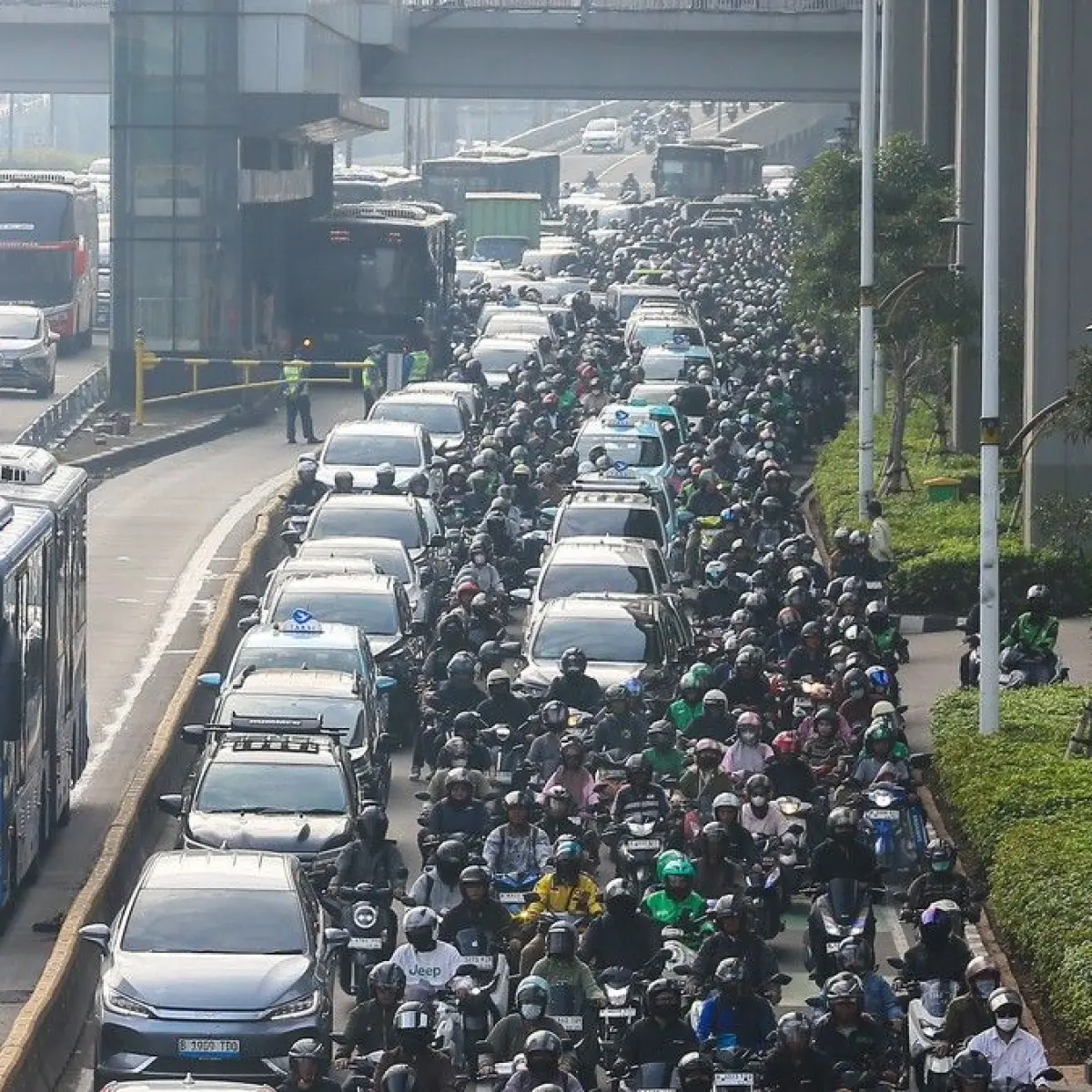
PORTALBERITA.CO.ID - The intensifying traffic congestion experienced by residents across major Indonesian metropolitan areas serves as a stark visual representation of the nation's soaring rate of motor vehicle ownership. This phenomenon continues to accelerate annually, driven by a steady increase in the number of vehicles actively operating on the roads daily.
The Central Statistics Agency (Badan Pusat Statistik or BPS) recently released official figures confirming a substantial year-on-year expansion in the total number of registered motor vehicles across Indonesia. This latest data compilation, covering the period up to the year 2025, indicates that the cumulative vehicle count has now officially exceeded the 170 million unit threshold nationwide.
As reported by Badan Pusat Statistik (BPS), the specific publication detailing this trend is titled "Jumlah Kendaraan Bermotor Menurut Provinsi dan Jenis Kendaraan (unit), 2025." This official report provides the definitive accounting of the nation’s growing automotive footprint.
According to Badan Pusat Statistik (BPS), the total accumulated figure for registered motor vehicles across the entire Indonesian archipelago was precisely recorded at 172,938,093 units as of the reporting period. This comprehensive figure encompasses the entire spectrum of the national fleet, including private passenger cars, public buses, commercial trucks, and motorcycles.
The data signifies a critical juncture for urban planning and infrastructure development across the country, forcing regional governments to urgently reassess road capacity and traffic management strategies. This massive fleet size directly correlates with the daily movement and logistical demands within Indonesian provinces.
While Jakarta has historically been synonymous with high vehicle density, the new statistics point toward a different administrative region now holding the top spot for the sheer volume of registered vehicles. This shift challenges long-held assumptions about where the nation’s primary vehicle concentration lies.
"The total number of registered motor vehicles in all of Indonesia was recorded at 172,938,093 units," stated Badan Pusat Statistik (BPS). This official statement confirms the scale of the national vehicle parc as documented in their annual statistical release for 2025.
This unprecedented growth in vehicle numbers highlights an urgent need for improved public transportation alternatives and sustainable mobility solutions to mitigate gridlock and environmental impact in densely populated areas. Authorities must now address the logistical implications of this record fleet size.
The BPS report details the breakdown by vehicle type, making it possible for policy makers to tailor specific interventions, whether focusing on regulating heavy goods movement or managing the proliferation of private two-wheeled transport. Understanding this composition is key to effective urban solutions.