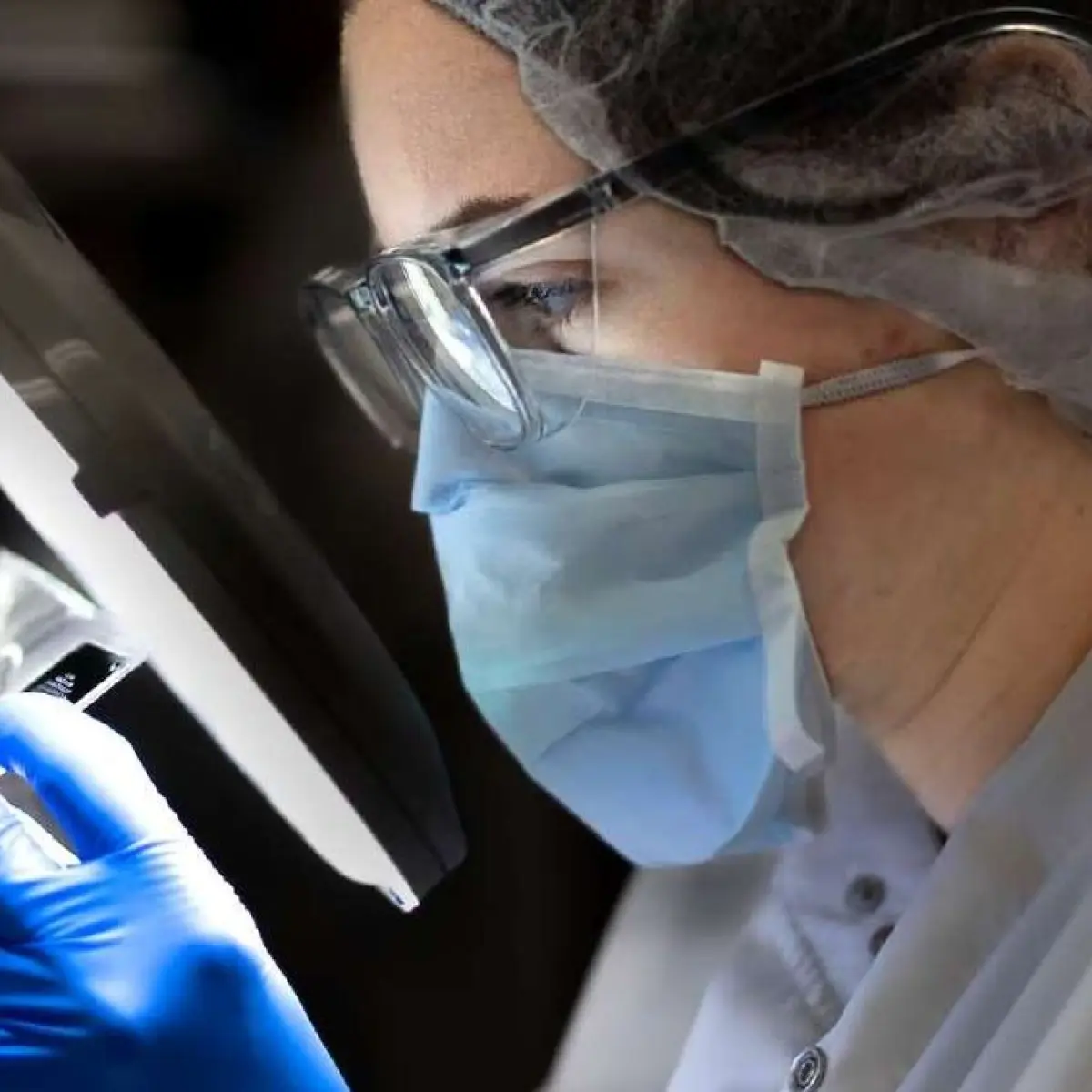
PORTALBERITA.CO.ID - A significant advancement in tropical disease management has arrived from Utah, where BioFire Defense has successfully developed and secured U.S. Food and Drug Administration (FDA) approval for a specialized diagnostic test panel. This tool is specifically engineered to identify various strains of the Ebola virus amid active outbreaks currently affecting regions in the Democratic Republic of Congo and Uganda, as reported by Ksl.
BioFire Defense, a subsidiary of bioMérieux based in Murray, dedicated a decade to the complex engineering process involved in creating this system capable of detecting multiple tropical pathogens. The development effort was significantly spurred into action starting in 2014, following the widespread emergence of the Zaire Ebola strain, which created an immediate need for specialized diagnostics targeting illnesses like malaria, dengue, and Ebola.
The critical partnership to construct this advanced diagnostic panel commenced in 2015, involving collaboration with the United States military. "The U.S. military wanted a diagnostic tool that was in their toolbox to identify the diseases and then potentially treat them," said Matt Scullion, vice president of business development at BioFire Defense.
This military involvement stemmed from concerns regarding service personnel contracting dangerous pathogens like Ebola during overseas deployments and subsequently introducing those infections back into the domestic U.S. population. Following eight years of focused engineering work, the comprehensive diagnostic system finally achieved crucial clearance from the U.S. Food and Drug Administration in 2023.
The company subsequently began marketing the technology, distributing the diagnostic tools to medical facilities and establishing necessary clinical evaluation networks across key areas including Africa, Southeast Asia, and Central America. Initial clinical presentations for many tropical infections are nearly identical, presenting considerable hurdles for accurate medical identification in field settings.
"A patient will come in with a very high fever, but nothing else that differentiates Ebola from malaria," said Matt Scullion. This diagnostic ambiguity necessitates rapid testing to ensure proper isolation protocols are immediately implemented for patient safety.

The capability of the panel is crucial for effective triage and containment, as it can differentiate between diseases that present similarly. "Fundamentally, you want to make sure that you don't stick a malaria patient in with all the Ebola patients, because if they didn't have Ebola before, they'll have Ebola after they've been exposed to other patients for a period of time," said Matt Scullion.
The BioFire Defense tools allow medical personnel to quickly pinpoint specific ailments, enabling targeted care and stricter transmission control measures. "That's the advantage of our panel. We can test for more than just Ebola, and be able to diagnose these people with very high fevers and differentiate between the different diseases," said Matt Scullion.
Specifically, the panel can test for all four known human-infecting Ebola strains, as well as one strain with potential to infect humans, including the Bundibugyo strain currently driving active infections in Africa. "It can test for the four different known strains of Ebola that infect humans and one that could infect humans," said Matt Scullion.




.png)