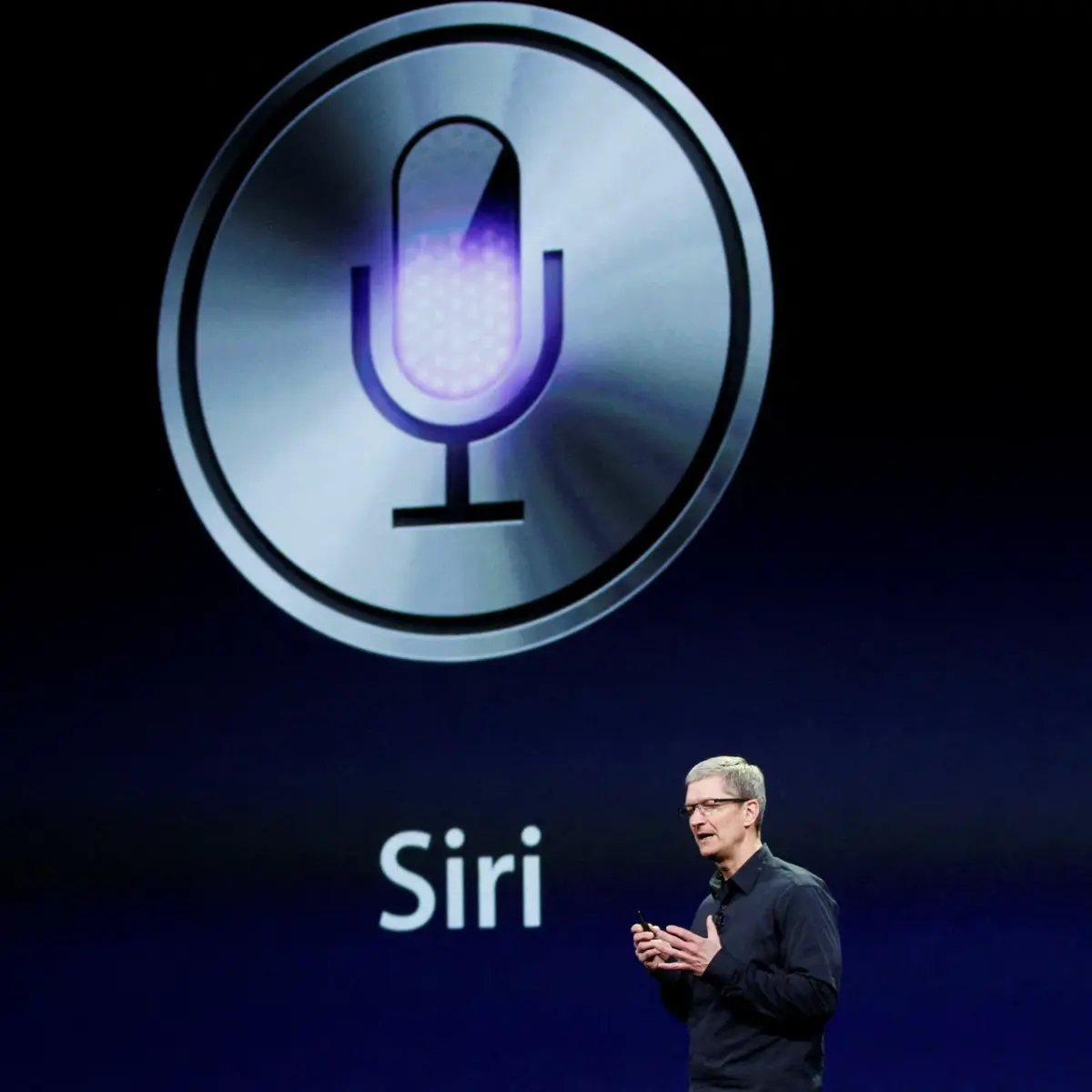
PORTALBERITA.CO.ID - Apple is set to launch significant artificial intelligence upgrades to its virtual assistant, Siri, and various applications later this year, marking a notable shift in its technological strategy. This unveiling, which occurred during CEO Tim Cook’s recent annual showcase, signals an intensifying partnership with rival technology giant Alphabet (Google).
The much-anticipated AI overhaul for Siri, which was previously delayed after overpromising capabilities two years ago, underscores Apple's need to rapidly catch up in generative AI development. As reported by BLOOMBERG, Apple had previously struggled in this domain, citing restrictive privacy policies as a hurdle to collecting necessary user data for robust AI training.
This new direction has elevated Apple’s relationship with Alphabet, overshadowing its prior collaboration with OpenAI, despite competing across multiple fronts including devices, software, and advertising. The upgraded features will debut later this year, initially omitting the European Union and China due to regulatory considerations, with performance in the initial rollout being critical.

Behind the scenes, Apple's reliance on Google's infrastructure is becoming more pronounced, potentially granting Alphabet significant negotiating power in their ongoing business arrangements. Google already pays Apple billions annually to remain the default search engine on iPhones, according to unsealed court documents related to a US antitrust lawsuit.
The core of the new "Apple Intelligence" features utilizes technology derived from Google's Gemini chatbot, with the most demanding processes running on Google’s cloud infrastructure. Specifically, the top-tier "AFM Cloud Pro" generative model operates within Google's data centers, utilizing powerful tensor processing units for complex computations.
This means that while simple requests are processed locally on the iPhone, intensive tasks, such as analyzing extensive documents, are sent to be processed on machines housed within Google's facilities. As reported by BLOOMBERG, this operational setup effectively positions Apple as a "wrapper" around Google's core AI capabilities, given the high cost and technical challenge of building foundational models independently.

Apple executives maintain that the collaboration ensures user data remains secure, asserting that no information is stored on Google’s servers, nor can Google use it for its own AI training. However, this claim directly challenges the principle of data collection that underpins Google’s business model.
Apple’s software chief, Craig Federighi, recently took a stance against AI services that retain "personal interactions," a practice Google employs in some of its own offerings. As reported by BLOOMBERG, Apple is betting that its loyal customer base will trust that its proprietary privacy layer effectively shields their data from the underlying Google infrastructure.
This deepening entanglement creates regulatory risk, as both companies already face antitrust scrutiny over their existing ties, and increased dependency provides further grounds for legal challenges. As stated by BLOOMBERG, "Apple has made privacy central to its brand, but partnering on AI with a business founded on collecting personal data certainly muddies the waters."